
 Timothy Bramlett
You published a page, checked Google Search Console a few weeks later, and it shows zero impressions. Should you keep waiting, rewrite it, or delete it?
The short answer: give a new page at least 6 months before you judge it, and don't remove anything until it has had 12 months of zero impressions and you have checked that it is actually indexed. Below is what Google has said, what the ranking data shows, and a simple rule you can follow.
What Google Says About New Pages
Google has never published a fixed timeline for how long a new page takes to show up in search. Its Search Advocate John Mueller has addressed the idea of a "sandbox" (Google holding new pages back) and a "honeymoon" (Google boosting new pages) directly, and said neither is real.
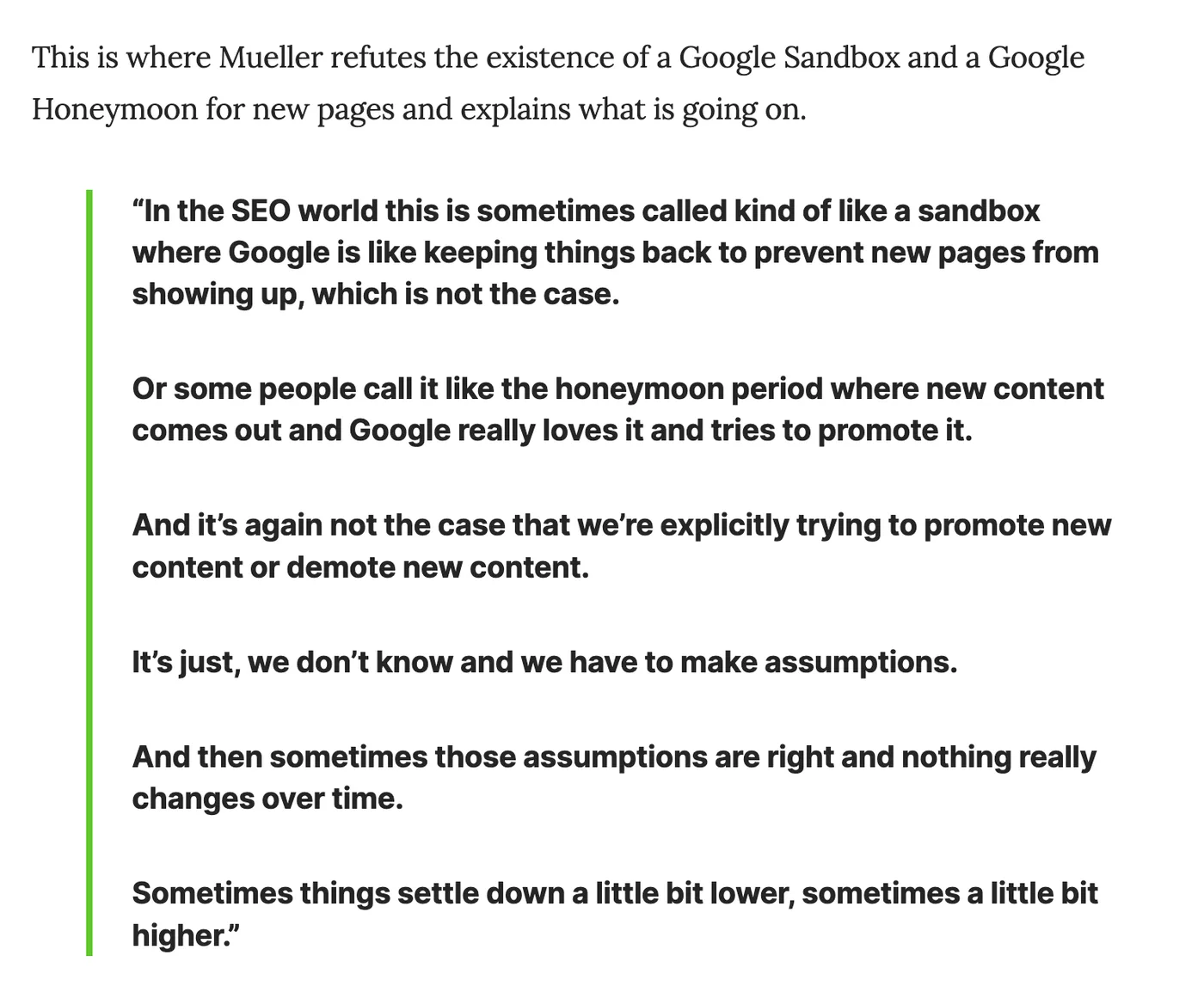
In his words, as reported by Search Engine Journal: "It's just, we don't know and we have to make assumptions. And then sometimes those assumptions are right and nothing really changes over time."
On indexing, Search Engine Journal summarized Mueller as saying a new page can take anywhere from several hours to several weeks to be indexed, and that he suspects most good content is picked up within about a week. Being indexed is only step one, though. Impressions come when Google decides your page is a good answer for a real search.
How Long Ranking Really Takes
Ahrefs has studied this twice. In the 2025 update of its study, only 1.74% of a random sample of 1 million new pages reached Google's top 10 within a year, down from 5.7% in its 2017 study. When Ahrefs looked only at non empty English pages, the figure was 6.11%, which it says "might be a more fair number to use."
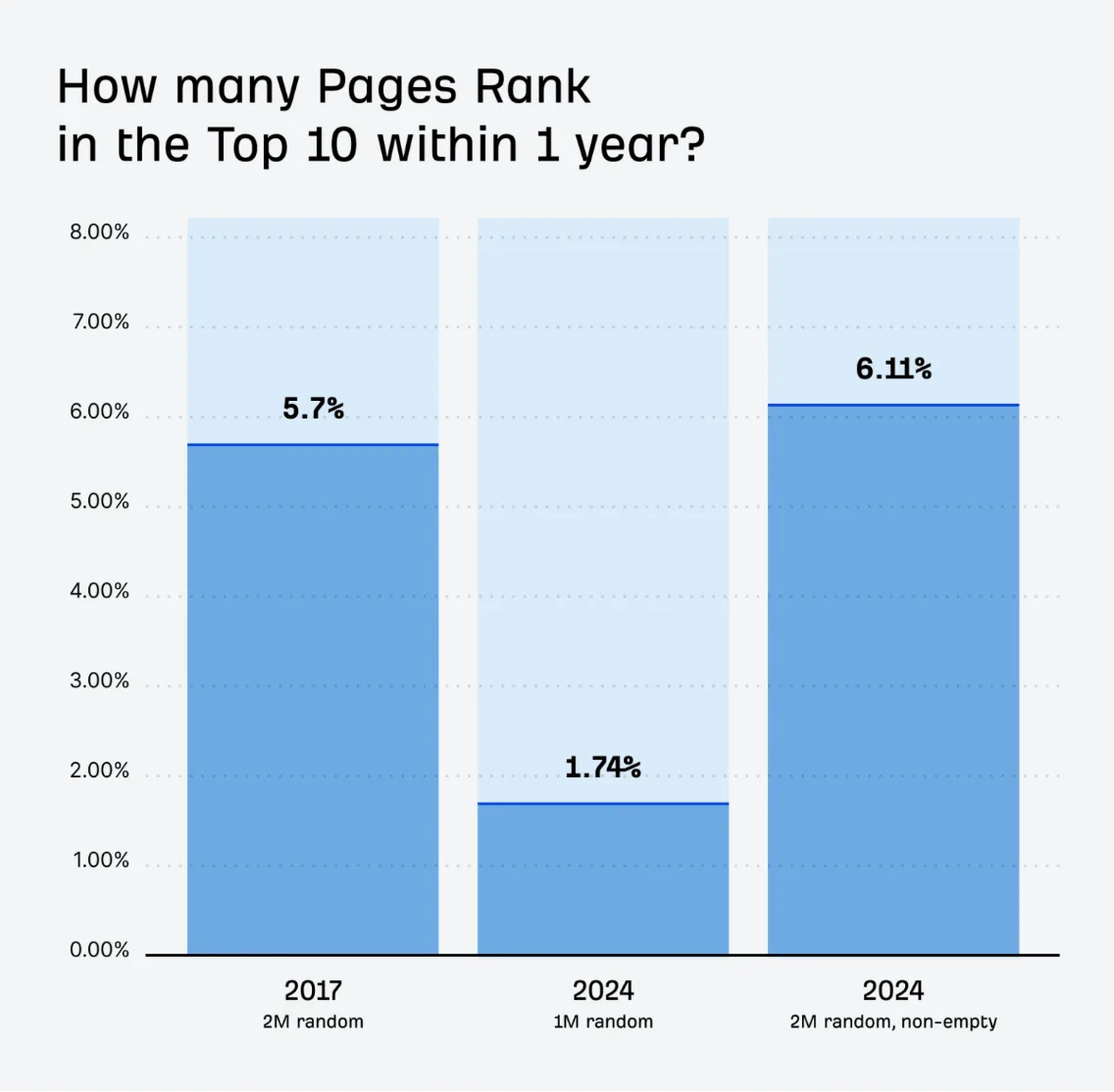
Two more numbers from the same study put this in perspective:
So most new pages never rank well, the ones that do often show signs early, and the pages holding top spots have usually been around for years. A few months of silence is normal.
First, Check That the Page Is Actually Indexed
Zero impressions sometimes has nothing to do with quality. The page may simply not be in Google's index. Before you decide anything, paste the URL into the URL Inspection tool in Search Console.
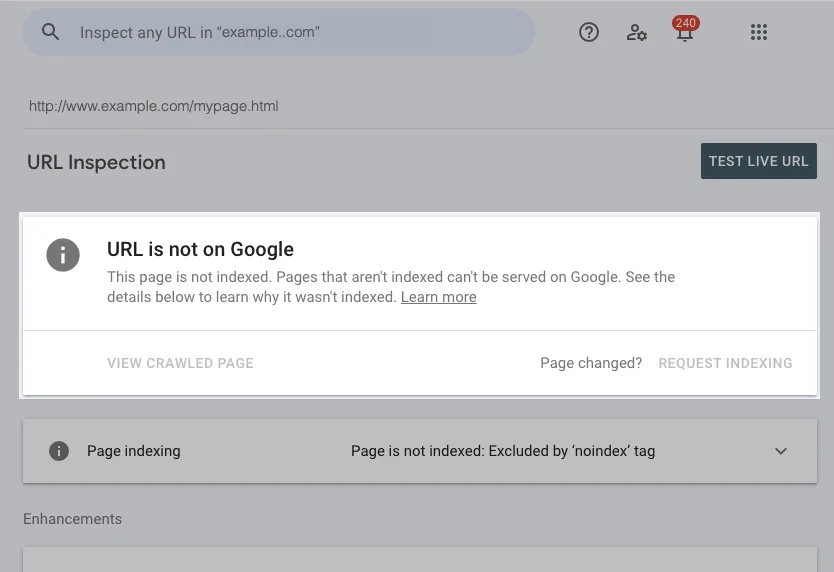
Also check that the page is in your sitemap and that at least one other page on your site links to it. A page with no internal links is hard for Google to find and easy for it to ignore.
Zero Impressions Is Not the Same as Low Quality
Mueller has made this point himself. Asked about pruning low traffic articles in 2020, he said, as reported by Search Engine Journal: "Because it's not low quality content. It's just less popular content."
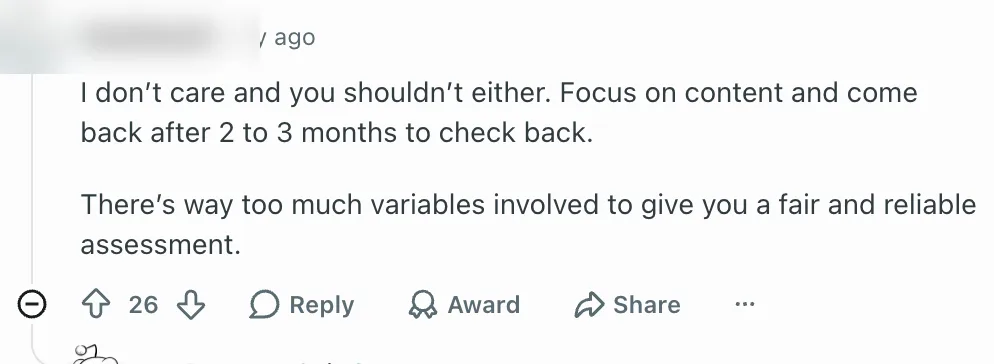
Some pages also do a job that never shows up as impressions. They support other pages in a topic, answer a question your customers ask, or help visitors who are already on your site. An SEO on Reddit put it bluntly:
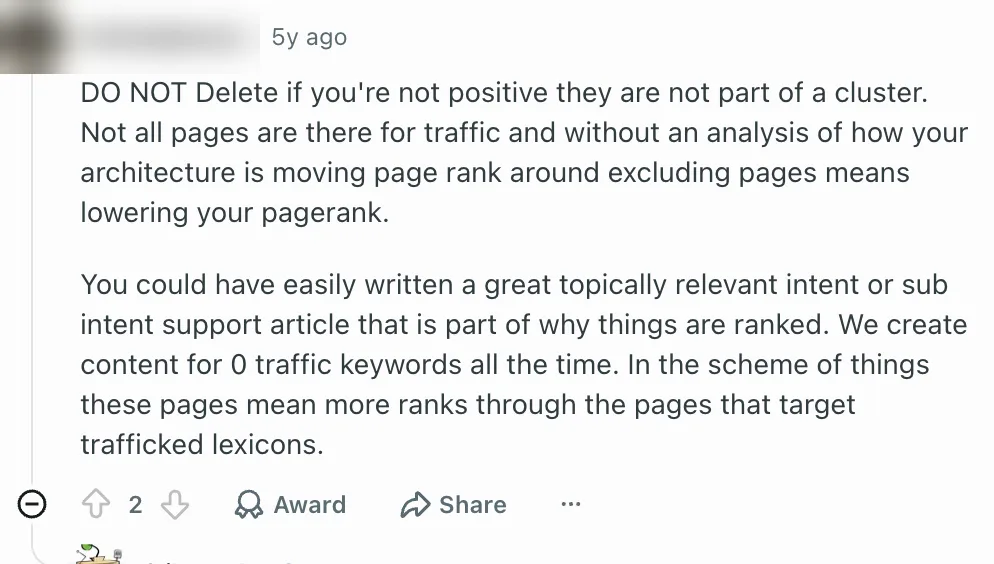
Low traffic is a reason to look closer, not an automatic reason to delete.
A Simple Timeline for Deciding
Google doesn't give a cutoff, so this is our working rule, based on Google's guidance and on what SEO practitioners commonly recommend. Always judge with 12 months of Search Console data where you have it, so a seasonal page doesn't look dead in its off season.
Improve, Merge, Redirect or Remove
Google's own documentation treats deletion as the final option, not the first one.
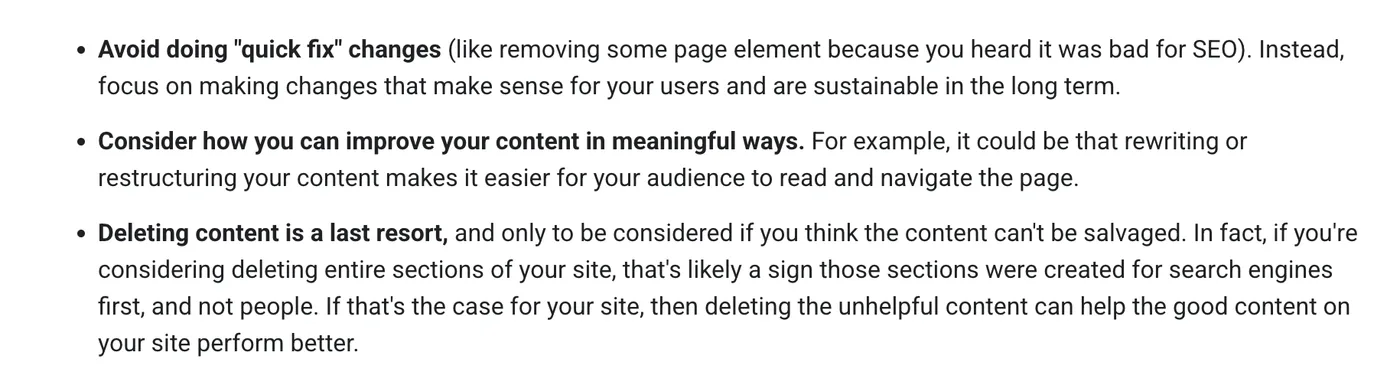
From Google's guidance on core updates: "Deleting content is a last resort, and only to be considered if you think the content can't be salvaged." The same page notes that if a site has whole sections made for search engines rather than people, removing them "can help the good content on your site perform better." Mueller's simpler version, from 2021: "Just because it's old doesn't mean it's bad," but if it is bad, "either improve it or remove it."
Here is how to choose:
How to Prune Without Hurting Your Site
Pruning works well for some sites and backfires for others. A few precautions make the difference:
One SEO on Reddit described their process, which worked for most clients but not all:
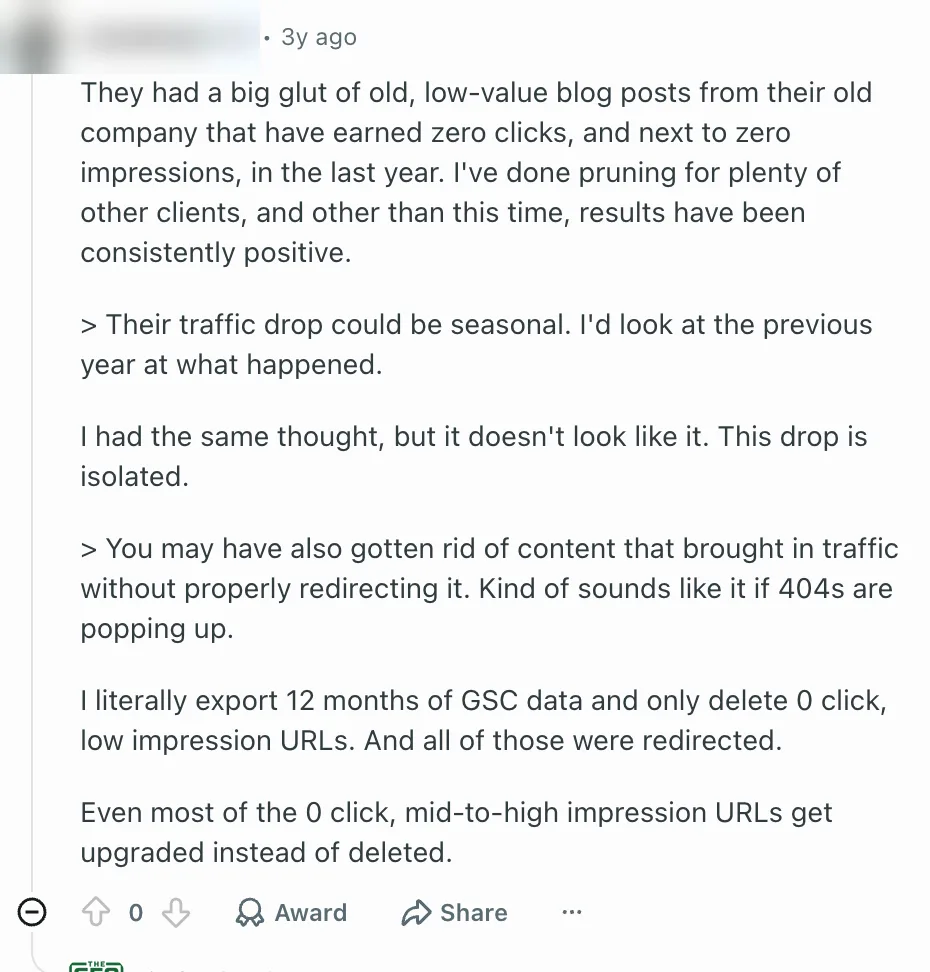
In that same thread, another user suggested the likely cause of the traffic drop: "It's possible some of those pages were supporting other pages that were getting traffic." That is exactly why step 4 matters.
When pruning works, the results can be large. These numbers come from agency case studies, not Google, so treat them as examples rather than promises:
How Long Until You See Results After Pruning
Expect to wait months, not days. In 2021, a site owner asked Mueller how long it would take Google to reassess a site that had cut 80,000 of its 100,000 pages.
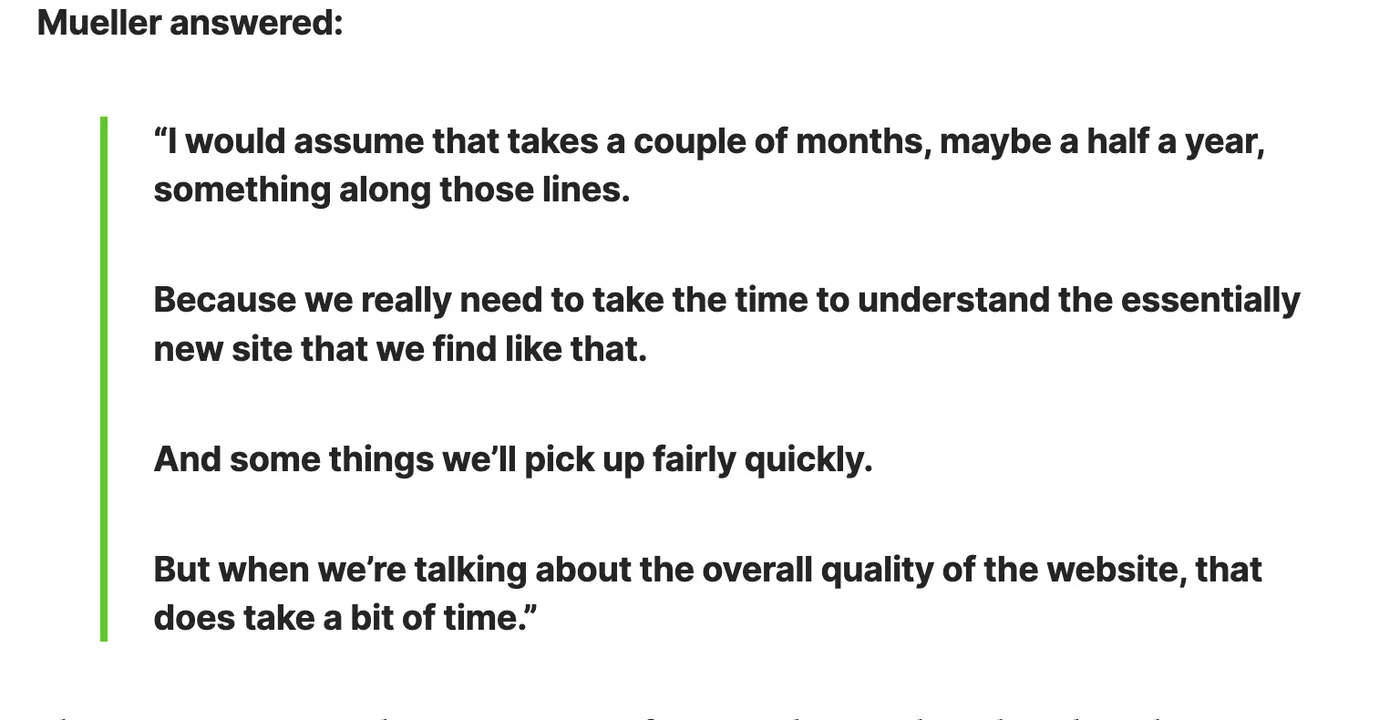
His answer, as reported by Search Engine Journal: "I would assume that takes a couple of months, maybe a half a year, something along those lines." On significant quality changes in general, he has said it is "not something that you can fix in a week," more like "three, four months." Google's core updates documentation agrees that it "could take several months" for its systems to recognize a site has improved.
The Bottom Line
Search traffic is slow to build, which is why it helps to get your startup in front of people in other ways while you wait. Post your startup on PostYourStartup: paste your URL and our AI fills in most of the listing, then go head to head with the week's other launches in the Startup Battle.